
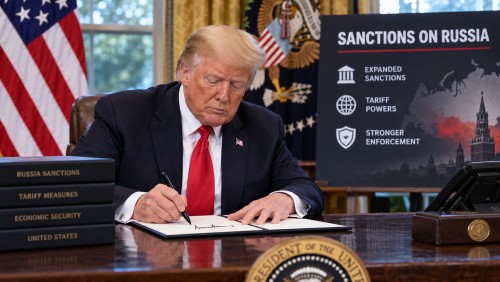
The recent expansion of U.S. sanctions against Russia, signed into law by President Donald Trump, could significantly impact countries that rely on Russian energy, such as India and China. This legislation empowers the president to impose tariffs of up to 100% on nations that continue to purchase Russian oil and gas, potentially reshaping global energy markets and diplomatic relations.
This new law, which also extends existing sanctions on Iran, passed the House of Representatives with bipartisan support before being signed on September 18. It targets Russian officials, financial networks, and entities linked to Russia’s military operations, aiming to curb Russia’s revenue from energy exports. The White House emphasized that the law strengthens the president’s authority to enforce these sanctions and tariffs, marking a strategic move in U.S. foreign policy.
The legislation’s broad scope allows the U.S. administration to decide which countries will face these tariffs and whether any sanctions may be waived. This flexibility could lead to varied international responses, as countries assess their energy policies and diplomatic ties with Russia. Major economies like India and China, which are significant importers of Russian energy, may need to reconsider their strategies to avoid potential tariff penalties.
In addition to targeting energy transactions, the law focuses on disrupting financial channels and other supportive networks connected to Russia’s war efforts. This comprehensive approach is designed to exert pressure on Moscow by cutting off crucial revenue streams and limiting its ability to fund military activities.
As the administration begins to implement these measures, global markets and international relations could see shifts, with countries balancing economic interests against the risk of U.S. tariffs. The ultimate impact will depend on how these powers are utilized in the coming months, affecting not only diplomatic ties but also the global energy landscape.