
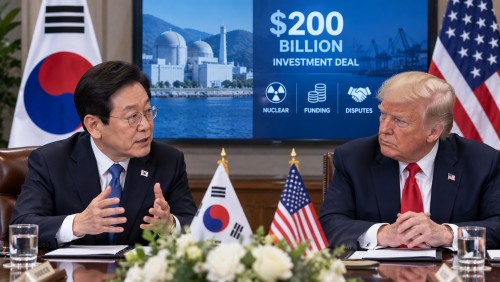
The ongoing negotiations between South Korea and the United States over a substantial $200 billion investment commitment by Seoul are facing significant hurdles that could delay key projects. Central to these challenges are disagreements over nuclear reactor designs and investment terms, potentially affecting the construction of new reactors and the advancement of energy infrastructure in the US.
The discussions have hit a snag primarily due to differing preferences for nuclear reactor technologies. The US and South Korea have proposed building eight reactors, six of which would use Westinghouse’s AP1000 design, while two would feature South Korea’s APR1400 technology. However, US officials and Westinghouse are reportedly resistant to incorporating the Korean-designed APR1400, complicating the finalization of the nuclear agreement.
In addition to the design dispute, funding schedules and investment risk-sharing are contentious issues. The US has asked South Korea to contribute over $9 billion by the end of the year, contrasting with Seoul’s plan to make a smaller initial payment in 2026 and increase investments from 2027 onwards. This difference in timing adds an additional layer of complexity to reaching a consensus.
The allocation of profits and losses from these projects remains another sticking point. Under the proposed framework, the US would receive 90% of net profits after recovering the principal and interest, but South Korea insists on a model where profits from successful projects offset any losses from unsuccessful ones. This disagreement could lead to uneven financial outcomes, with South Korea potentially bearing a disproportionate share of any losses.
Furthermore, South Korea is interested in a significant stake in Westinghouse, seeking a 15% to 20% ownership along with voting rights and a board seat, whereas Westinghouse aims to keep Seoul’s stake below 10%. These ownership negotiations add another layer to the financial and strategic complexities both countries face.
Despite these challenges, both nations continue to engage in discussions, with South Korea’s Industry Ministry emphasizing that no final decisions have been reached. The outcome of these negotiations will play a crucial role in shaping the future of nuclear energy collaboration and broader investment ties between the two countries.