
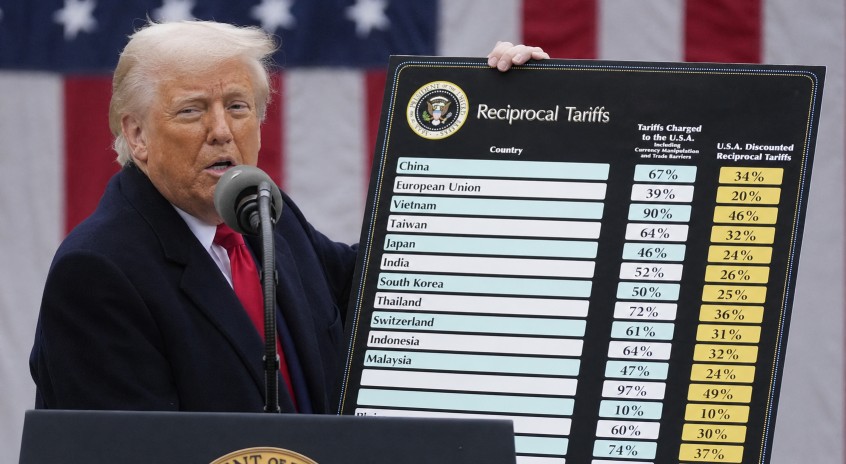
In a significant development in US trade policy, President Donald Trump has introduced new tariffs on imports from over 80 countries, following the expiration of a temporary 10% global tariff earlier this week. The newly imposed tariffs, which range from 10% to 12.5%, target imports from nations such as the United Kingdom, members of the European Union, Canada, Mexico, Australia, India, and China. These measures are being enacted under Section 301 of the US Trade Act of 1974, with the administration citing concerns over forced labor in global supply chains as the rationale. US Trade Representative Jamieson Greer emphasized the expectation for US trading partners to bolster restrictions on imports associated with forced labor.
This announcement comes in the wake of a US Supreme Court ruling earlier this year that questioned the legality of previous tariffs imposed under emergency powers, leading the administration to pursue a different legal approach. The decision to implement these new tariffs has sparked criticism from several US allies. Australia and Brazil have labeled the tariffs as unjustified and expressed their intent to seek their removal. Meanwhile, the European Union has requested clarification from the United States, with EU officials expressing surprise at the administration’s move.
Canada, on the other hand, has argued against being targeted by the tariffs, asserting that it already enforces robust measures against forced-labor imports and advocating for a multilateral approach. Trade experts have raised questions about whether the president possesses the constitutional authority to impose such broad tariff measures without congressional approval. Some legal analysts anticipate that the new tariffs might face further challenges in court.
Domestically, the administration’s tariff policies continue to stir political division. Recent public opinion surveys reveal that many Americans believe these tariffs have contributed to increased consumer prices. Despite this perception, the administration maintains that its trade policies have fortified the US economy and safeguarded domestic industries. The introduction of these latest tariffs adds a new layer of uncertainty to global trade dynamics as governments worldwide evaluate their economic impact and deliberate on potential responses.