
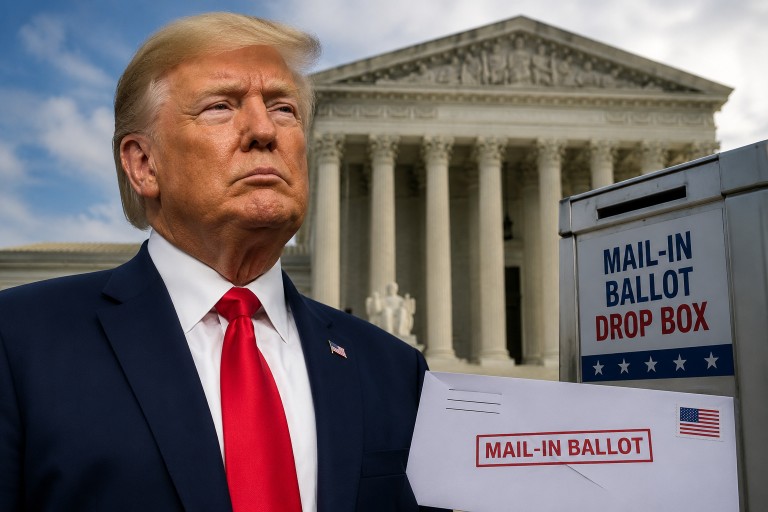
The U.S. Supreme Court has granted the Trump administration permission to advance portions of its plan to restrict mail-in voting rules as the November 2026 midterm elections approach. In a 6-3 ruling, the court’s conservative majority lifted an injunction that had previously halted President Donald Trump’s executive order. Despite this decision, another injunction persists, leaving the administration’s full implementation of the order vulnerable to ongoing legal disputes.
Issued in March, the executive order mandates the federal government to compile a list of eligible voters based on citizenship and restricts mail-in ballots to only those on the list. Additionally, it calls for increased federal oversight of state and local election officials concerning voter eligibility. However, Democratic officials from 23 states and Washington, DC, have contested the order, claiming that the Constitution delegates election administration authority to states and Congress. They also caution that making significant changes so close to the election might disrupt preparations and hinder eligible voters from participating.
Initially, a judge in Massachusetts blocked the order, concluding that the president lacked the authority to dictate state administration of federal elections. This decision was upheld by an appeals court, and a subsequent nationwide injunction remains in effect. The Supreme Court clarified that lifting the first injunction does not imply that every administrative action to implement the order will be deemed lawful. The outcome of the remaining legal challenges could ultimately dictate the extent of the policy’s implementation.
The Supreme Court’s decision has been met with strong opposition from Democratic leaders and voting-rights organizations, who argue that the measures could sow confusion and complicate voting for eligible citizens. States like California are gearing up for further legal challenges against the order. The dispute arises with less than 100 days until the November midterms, a crucial period when voters will decide the control of the U.S. House of Representatives and the Senate. In the 2024 presidential election, mail-in voting constituted about 30% of the ballots, underscoring its continued significance in the U.S. electoral process.
Throughout his presidency, Trump has persistently questioned the security of mail-in voting and has advocated for broader reforms to election rules as part of his administration’s policy agenda. The current legal developments are a continuation of his efforts to tighten election regulations, prompting ongoing debate and legal scrutiny as the midterm elections loom.