
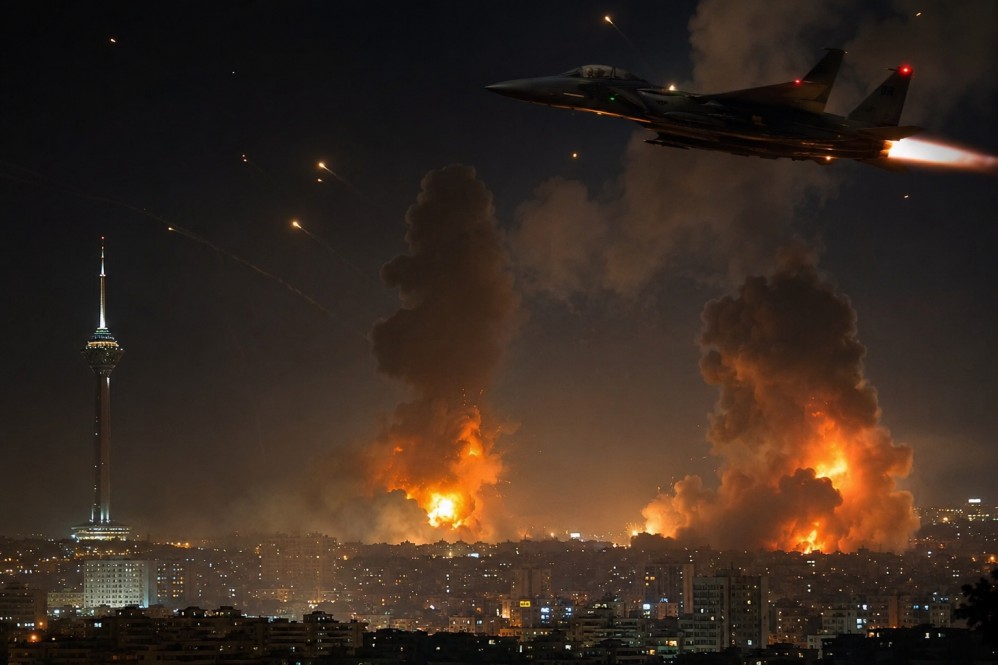
In a significant development, the United States has executed a third night of airstrikes targeting Iran, as President Donald Trump revealed intentions to implement a maritime blockade on the nation. Additionally, a 20% tariff is set to be imposed on cargo traversing the Strait of Hormuz under US-monitored security measures. The US Central Command emphasized that these strikes aim to diminish Iran’s military capabilities while safeguarding commercial shipping and civilians in this crucial maritime corridor. President Trump affirmed the continuation of military actions against Iran, underscoring America’s commitment to maintaining security control in the strait.
This announcement comes on the heels of reports indicating that two UAE oil tankers were hit by Iranian cruise missiles in Omani waters, resulting in the death of one Indian crew member and injuries to several others. The escalating tensions have led to an approximately 8% surge in Brent crude oil prices, reflecting mounting concerns over global energy security and supply.
Iran has strongly criticized the proposed maritime blockade, accusing the United States of jeopardizing international energy security. The Iranian government has warned of a robust response should any attempts be made to limit its maritime access. In the international arena, maritime authorities have pointed out that the imposition of mandatory transit fees in international waters is unsupported by current international law.
The intensifying military confrontations have stoked fears of a broader regional conflict, with ongoing attacks causing disruptions to shipping operations, elevating oil prices, and injecting uncertainty into the global economy. Observers are closely monitoring these developments, mindful of the potential implications for both regional stability and international economic conditions.