
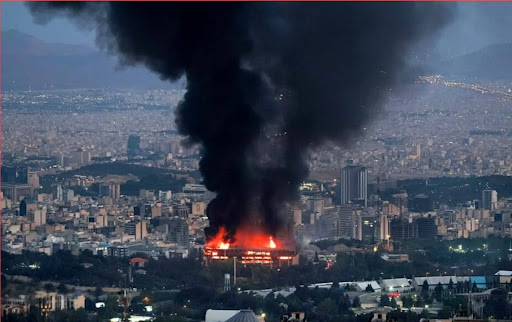
The global energy system was showing signs of breakdown on Saturday as the US-Iran conflict simultaneously targeted or disrupted three of its most critical components. The Strait of Hormuz, through which roughly 20 percent of global oil and gas passes daily, remained closed by Iran since February 28. Kharg Island, Iran’s primary crude export hub, was being bombed by US warplanes for the second consecutive day. And Fujairah in the UAE, one of the world’s most important ship-refuelling ports, had just been struck by Iranian ballistic missiles. The simultaneous disruption of all three nodes was unprecedented in scale and scope.
Oil prices were approaching $120 per barrel on Saturday, and analysts warned they could surge to $150 if Kharg Island’s full export capacity were eliminated. At that level, the economic consequences would extend far beyond the Gulf, affecting every nation that imported oil — which was to say, most of the world’s economies. Import-dependent developing nations were particularly vulnerable to the kind of inflation shock that a sustained oil price spike of this magnitude would produce. Governments from Asia to Europe were watching with growing alarm.
President Trump said in public remarks that Kharg Island had been effectively demolished by US airstrikes and called on China, France, Japan, South Korea, and the UK to send warships to help reopen the Strait of Hormuz. He simultaneously threatened to destroy Iran’s remaining oil infrastructure if the Hormuz blockade continued. Iran showed no sign of yielding, launching missiles at Fujairah, threatening Gulf energy facilities, firing rockets at Israel, and calling on Arab states to expel US forces. Israeli warplanes conducted dozens of raids inside Iran, killing at least 15 people in Isfahan.
US Defence Secretary Pete Hegseth claimed Iran’s leadership was “desperate and hiding” and wounded. Iranian officials confirmed the injury but called it minor. The International Crisis Group said the regime was intact and executing a deliberate strategy of prolonged conflict. The USS Tripoli and 2,500 additional US marines were heading to the region. Trump ruled out negotiations. Iran showed no willingness to open talks. The diplomatic channel that could end the economic emergency was completely closed.
The human toll of the conflict added moral urgency to the economic alarm. More than 1,400 Iranians had been killed in the bombing. Thirteen Israelis and roughly 20 Gulf residents had died. Lebanon’s crisis continued, with 800 killed and 850,000 displaced from Israeli strikes on Hezbollah. Six US troops died in an aircraft crash in Iraq. The US embassy in Baghdad was struck, and Americans in Iraq were ordered to leave. The global energy system was breaking down, and nobody with the power to stop it appeared ready to act.