
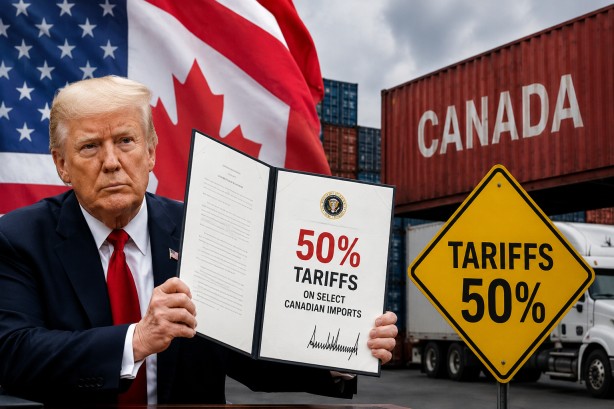
U.S. President Donald Trump has sanctioned a new set of tariffs, imposing a 50% levy on specific Canadian imports. This decision arises from claims of discriminatory practices by Canada against American products. The tariffs, which primarily affect automotive materials, dairy items, and alcoholic drinks, have been enacted through a series of executive orders as discussions under the United States-Mexico-Canada Agreement (USMCA) continue.
The Trump administration has justified these tariffs as a measure to counter what it perceives as unfair trade practices that have been detrimental to U.S. industries. This strategic move is anticipated to add complexity to the ongoing trade negotiations between Washington and Ottawa, focusing on trade dynamics and market access between the nations.
The introduction of these tariffs could potentially exacerbate economic tensions between the United States and Canada. Businesses and exporters are closely monitoring the situation, eager to see Canada’s reaction and how these measures might impact trade relations across North America.
The administration’s decision underscores the challenges in balancing trade partnerships while advocating for domestic economic interests. As discussions under the USMCA framework continue, the pressure mounts on both sides to find a resolution that addresses the concerns raised, without further straining bilateral relations.